
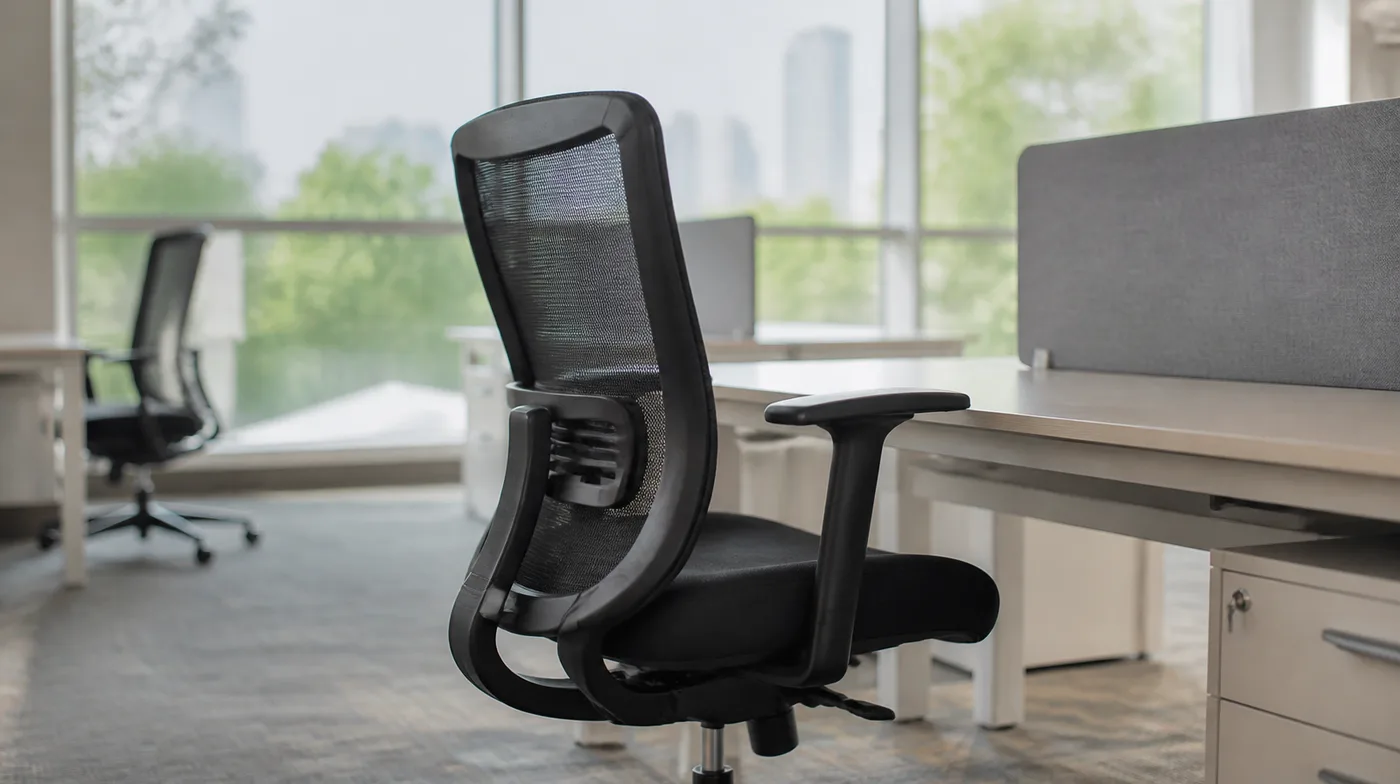
Most people in an office sit for six to eight hours a day. The chair matters more than the desk. Yet chair brochures are full of words that sound important and change nothing. Here is what matters, based on the chairs we sell and the complaints we hear.
Four adjustments that matter
- Seat height. Your feet should sit flat on the floor with your knees level with your hips. For most people that means a seat between 420 mm and 520 mm from the floor. Every chair we sell has a gas lift, so this one is easy.
- Lower back support. Some people call it lumbar support. The curve of the back rest should sit in the small of your back, not above it. If several people share the chair, you want the support to move up and down.
- Seat depth. Sit back fully. You should be able to fit two or three fingers between the front edge of the seat and the back of your knee. If you are tall or short, a seat that slides forward and back makes the difference.
- A tilt that supports you. A good chair lets you lean back while the seat tilts a little with you, and holds the position you choose. Chairs that just rock backwards tire your back by mid-afternoon.
If a chair has these four, it will look after you. If it does not, nothing else on the label makes up for it.
Things that sound important but rarely are
- “Executive.” This is a size and a finish, not a comfort standard. A tall back and leather look senior. They do not sit any better.
- Headrests. Useful if you lean right back to read or take calls. Most people never touch it.
- Extra-thick padding. Soft foam goes flat within a year. A firmer, shaped seat lasts far longer.
- “Ergonomic” on the box. On its own the word means nothing. Check for the four adjustments above.
Mesh or fabric?
A mesh back lets air through. On a warm Nairobi afternoon that is the difference people notice most. The most common choice in our showrooms is a fabric seat with a mesh back. Leather suits meeting rooms and executive offices, where people sit for shorter spells.
Armrests
Fixed arms are fine when one person uses the chair. For shared desks, choose arms that adjust in height at least. Arms that also move sideways and forward stop shoulders hunching up. One check that gets missed: the arms should slide under the edge of the desk. If they do not, the chair sits too far out and you lean forward all day.
Weight rating and spare parts
Ask for the weight rating, and make sure it covers the heaviest person likely to use the chair.
We keep spare parts in Nairobi, such as wheels, gas lifts and armrest pads, so a fault is usually fixed by swapping the part within a few days. You do not need a new chair.
Try before you buy
Both our showrooms have chairs on the floor. Just walk in. For big orders we bring samples to your office, to help you decide. Ten minutes sitting in a chair tells you more than any brochure.
One chair for many people? If your desks are shared, choose a chair where everything adjusts: height, lower back support, seat depth and arms. The extra cost is small next to the cost of people who are uncomfortable all day.